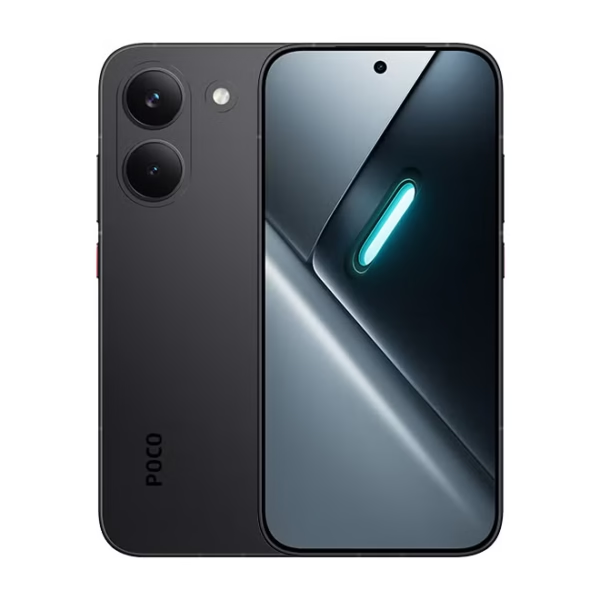
The Xiaomi Poco X8 is a large-screen 5G smartphone aimed at buyers who want strong battery life, a smooth AMOLED display and dependable everyday performance without moving into Xiaomi’s most expensive flagship territory. With a 6.83-inch 120Hz display, Snapdragon 6s Gen 4 processor, up to 12GB RAM and a battery reaching 9,000mAh on one version, it has plenty of numbers that look impressive on paper.
But specifications alone don’t tell the whole story. For Nigerian buyers, the more important question is how the Poco X8 handles long days on MTN or Airtel, gaming, mobile data, photography and charging—and whether its European pricing translates into good value once the phone reaches the Nigerian market.
So, is the Poco X8 a phone worth considering in Nigeria in 2026, or does its mid-range hardware come with too many compromises? Let’s look beyond the specification sheet.
Xiaomi Poco X8 Price in Nigeria
The Xiaomi Poco X8 is listed at about €360 internationally. Its Nigerian price is expected to be higher because imported smartphones are affected by exchange rates, shipping, taxes, retailer margins and the cost of bringing different storage configurations into the country.
For the Nigerian market, a reasonable estimated price would be around ₦550,000–₦850,000, depending on the RAM/storage configuration and where you buy it.
The 128GB versions should generally cost less than the 256GB models, while the 12GB RAM/256GB configuration could sit toward the upper end of the expected range.
Prices can also change quickly in Nigeria. A retailer who imported the Poco X8 when the naira was stronger may sell it differently from another seller restocking at a later exchange rate. Online stores, physical phone markets and individual importers may therefore have noticeably different prices.
Before buying, it is worth checking whether you are getting the 8GB/128GB, 8GB/256GB or 12GB/256GB version. Storage matters here because there is no microSD card slot.
How Does the Poco X8 Perform in Everyday Use?
The Snapdragon 6s Gen 4 isn’t designed to compete directly with Xiaomi’s premium Snapdragon-powered flagships, but that’s not necessarily a problem.
For normal activities such as WhatsApp, Instagram, TikTok, Chrome, YouTube, banking apps and switching between several applications, the Poco X8 should have enough processing power.
The higher RAM configurations become particularly interesting for people who keep many applications open. The 12GB RAM/256GB model should have more breathing room for heavier multitasking than the 6GB version.
The 256GB models also have UFS 3.1 storage, which gives them a meaningful advantage over the 128GB UFS 2.2 configuration when dealing with storage-heavy operations.
For a buyer planning to keep the phone for several years, the 256GB version makes more sense if the price difference is reasonable.
Poco X8 Gaming Performance
Gaming is one area where the Poco branding creates certain expectations.
The Snapdragon 6s Gen 4 and Adreno 710 combination should handle popular games such as PUBG Mobile and Call of Duty Mobile comfortably at sensible graphics settings. Less demanding titles should run without major difficulty.
However, buyers should not confuse the phone’s huge battery and 120Hz display with flagship gaming performance.
The Poco X8 is still a mid-range phone. Very demanding games at maximum graphical settings can push the GPU harder, potentially resulting in lower frame rates and increased heat during long sessions.
The large body does provide some physical room for heat dissipation, but sustained gaming will naturally consume considerably more power than ordinary social-media use.
For someone who plays PUBG or COD regularly but doesn’t require maximum graphics settings, the hardware should be adequate.
Camera Experience: Where the Poco X8 Makes Sense
The 50MP main camera with OIS is a sensible configuration for a mid-range phone.
Optical stabilization can help reduce camera shake and should be particularly useful when taking photographs in lower light or recording handheld video. The large megapixel count also provides enough resolution for detailed daytime shots.
However, the camera system isn’t particularly ambitious. There is no obvious dedicated telephoto camera in the supplied specifications, and video recording is limited to 1080p at 30fps.
That makes the Poco X8 more attractive to someone who primarily takes photographs for WhatsApp, Instagram, Facebook and everyday memories than to a creator looking for advanced smartphone videography.
The 16MP selfie camera should also be adequate for video calls and social media, although buyers focused heavily on front-camera photography may want to compare it with competing devices before purchasing.
Battery Life: The Poco X8’s Biggest Advantage
The battery is where this phone becomes particularly interesting for Nigerian users.
An 8,340mAh or 9,000mAh silicon-carbon battery gives the Poco X8 substantially more capacity than the batteries found in many mainstream smartphones.
For someone who spends long hours away from a charger, uses mobile data frequently or travels regularly, this can be a major advantage.
The exact battery life will still depend on screen brightness, network strength, gaming, 5G usage and background applications. Poor network conditions can also increase battery consumption, something Nigerian users can encounter when moving between areas with different levels of network coverage.
The 67W charging support helps balance the huge capacity. It isn’t the fastest charging technology available in 2026, but it is considerably more useful when paired with a battery this large.
Does the Poco X8 Get Hot?
Heat will depend heavily on how the phone is being used.
Light activities such as messaging, browsing and video streaming should place relatively little pressure on the Snapdragon 6s Gen 4. Gaming, prolonged 5G usage, high screen brightness and charging while performing demanding tasks can raise temperatures.
The 4nm manufacturing process should help with efficiency, but it cannot eliminate heat completely.
The phone’s large body may help spread heat during sustained workloads, although the 223g weight is part of the overall trade-off.
Poco X8 Pros and Cons
Pros
- Huge 8,340mAh or 9,000mAh battery options
- 120Hz AMOLED display
- Very high peak display brightness
- Gorilla Glass Victus 2
- IP68/IP69K protection
- 5G connectivity
- Up to 12GB RAM
- Up to 256GB storage
- UFS 3.1 on 256GB models
- 50MP main camera with OIS
- Stereo speakers with Dolby Atmos
- Android 16 and HyperOS 3
- Infrared port
- 67W wired charging
Cons
- 223g weight makes it relatively heavy
- No microSD card slot
- No 3.5mm headphone jack
- Rear video recording is limited to 1080p/30fps
- Snapdragon 6s Gen 4 is not flagship-level hardware
- 128GB model uses slower UFS 2.2 storage
- NFC availability depends on the market
Xiaomi Poco X8 vs Another Poco Phone
A natural alternative to the Poco X8 would be another Poco model positioned higher in the performance hierarchy.
The main question is what you value more. The X8 puts considerable emphasis on battery capacity, durability and display quality, while a more performance-focused Poco model may offer a faster processor or stronger graphics performance.
For users whose priority is gaming, the faster chipset can be more important than having an enormous 9,000mAh battery. On the other hand, someone who spends most of the day on WhatsApp, YouTube, browsing and mobile data may appreciate the X8’s battery advantage more.
The storage configuration also deserves attention. The 256GB Poco X8 models have UFS 3.1, so buyers should consider the complete configuration rather than comparing phones purely by RAM numbers.
Poco X8 vs Samsung Mid-Range Phones
Samsung’s mid-range Galaxy phones often compete for the same buyers, but the two approaches can be quite different.
The Poco X8 places greater emphasis on specifications such as its huge battery, 120Hz AMOLED screen, high peak brightness and aggressive hardware configuration.
Samsung alternatives may appeal more to buyers who prioritize Samsung’s software ecosystem, camera processing, long-term software experience and wider retail/service presence.
For a Nigerian buyer, availability and after-sales support can matter just as much as benchmark performance. Before spending several hundred thousand naira on an imported Poco device, it is worth checking the seller’s warranty arrangements and whether replacement parts are reasonably available.
Who Should Buy the Poco X8?
The Poco X8 makes the most sense for someone who wants long battery endurance, a large AMOLED screen and modern connectivity without necessarily buying a premium flagship.
It should suit:
- Heavy mobile-data users
- Students who spend long hours away from a charger
- People who watch a lot of videos
- Social-media users
- Casual and moderate gamers
- Buyers who want a large 120Hz AMOLED display
- Users who value water and dust resistance
- People who want a very large battery
However, it may not be the right choice for someone who wants a compact phone. At 223g and 8.6mm thick, this isn’t designed to disappear in your pocket.
It may also be worth looking elsewhere if your main priority is advanced smartphone video recording, flagship gaming performance or a dedicated zoom camera.
Frequently Asked Questions
Is the Xiaomi Poco X8 good for gaming?
Yes, the Poco X8 should be suitable for PUBG Mobile, Call of Duty Mobile and similar games at appropriate graphics settings. Its Snapdragon 6s Gen 4 and Adreno 710 provide mid-range gaming performance, although it should not be treated as a flagship gaming phone.
Does the Poco X8 support 5G?
Yes. The Poco X8 supports GSM, HSPA, LTE and 5G connectivity. Actual 5G availability depends on your network provider, location and the supported bands of the specific model.
How big is the Poco X8 battery?
The Poco X8 has two listed battery versions: 8,340mAh and 9,000mAh, both using silicon-carbon battery technology.
Does the Poco X8 have a memory card slot?
No. There is no microSD card slot. Buyers should therefore choose their storage carefully. The phone is available with 128GB and 256GB internal storage.
Does the Poco X8 have a headphone jack?
No. The phone uses USB Type-C for wired connectivity and supports wireless audio through Bluetooth.
Is the Poco X8 worth buying in Nigeria?
The answer depends heavily on its actual Nigerian selling price. Its large battery, AMOLED display, 5G connectivity and durability are attractive, but buyers should compare the final local price against competing phones offering faster processors or stronger camera systems.
Final Verdict
The Xiaomi Poco X8 is an interesting mid-range phone because it doesn’t try to win on just one specification.
Its combination of a 120Hz AMOLED display, enormous battery, 5G connectivity, IP68/IP69K protection, Gorilla Glass Victus 2, stereo speakers and up to 12GB RAM gives it a strong everyday package.
The biggest compromise is performance positioning. The Snapdragon 6s Gen 4 is capable, but this isn’t a flagship gaming device. The camera system is similarly practical rather than spectacular, particularly with 1080p/30fps video.
For Nigerian buyers, the battery may be the biggest selling point. If you’re regularly away from a charger, rely heavily on MTN or Airtel mobile data, watch plenty of videos or simply want a phone that can last through a demanding day, the Poco X8’s battery capacity is difficult to ignore.
The 256GB version deserves particular attention because it combines more storage with faster UFS 3.1 technology. If the price difference is manageable, it is likely the more sensible configuration for someone intending to keep the phone for several years.
Ultimately, the Poco X8 should be judged by its actual Nigerian street price, not simply its international €360 figure. At the right price, its battery, display and durability make it a compelling package; at a significantly inflated import price, competing phones may offer better overall hardware balance.