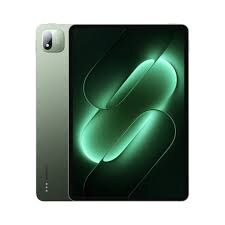
The Xiaomi Pad 9 Pro is built for people who want tablet performance without stepping down to mid-range hardware. With a large 12.5-inch 144Hz display, Snapdragon 8 Gen 5 processor, up to 16GB RAM, a huge 11,000mAh battery and six Dolby Atmos speakers, this is clearly aimed at demanding users rather than basic browsing and streaming.
For Nigerian buyers, the Pad 9 Pro is particularly interesting because it sits between a traditional tablet and a lightweight productivity machine. It has enough performance for demanding Android games, video editing, multitasking and creative work, while the 3:2 display is also better suited to documents and productivity than the wider screens found on many entertainment-focused tablets.
So, what does the Xiaomi Pad 9 Pro price in Nigeria look like, what can its Snapdragon 8 Gen 5 chip actually handle, and is this tablet a sensible alternative to an iPad or Samsung Galaxy Tab? Here is everything you need to know.
Xiaomi Pad 9 Pro Price in Nigeria and Availability
The Xiaomi Pad 9 Pro has an international price of about €500, although the actual Nigerian price will depend heavily on the storage configuration, exchange rate and retailer.
Based on the international pricing and the hardware offered, the Xiaomi Pad 9 Pro could sell for roughly ₦750,000 to ₦1.1 million in Nigeria, depending on the RAM and storage variant. Higher-memory versions, particularly the 256GB model with 16GB RAM, are likely to cost more.
Nigerian pricing can change considerably because imported smartphones and tablets are affected by foreign exchange rates, shipping costs, import expenses and retailer margins. The price you see in Lagos, Abuja, Onitsha, Awka or an online store may therefore differ significantly.
Since the tablet has no cellular connectivity, you are paying primarily for its display, processor, memory, speakers, battery and productivity features rather than 4G or 5G connectivity.
A 12.5-Inch 144Hz Display Made for More Than Netflix
The Xiaomi Pad 9 Pro’s display is one of its biggest selling points.
Instead of using a conventional 16:10 tablet screen, Xiaomi has gone with a 3:2 aspect ratio. That gives the Pad 9 Pro a more spacious vertical workspace, which can be particularly useful when reading PDFs, editing documents, browsing websites or working with spreadsheets.
The 12.5-inch IPS LCD panel has a sharp 3200 x 2136 resolution, resulting in around 308 pixels per inch. Text should therefore look crisp, while images and videos should retain plenty of detail.
The 144Hz refresh rate is another major advantage. Scrolling through websites, moving between applications and navigating HyperOS should feel noticeably smoother than on a typical 60Hz tablet.
HDR10, Dolby Vision and HDR Vivid support also make the display more versatile for compatible movies and other high-dynamic-range content. With up to 1000 nits of peak brightness, the panel should also be reasonably usable in bright environments, although direct sunlight can still be challenging for an LCD screen.
Snapdragon 8 Gen 5 Turns the Pad 9 Pro Into a Performance Tablet
The biggest difference between the Xiaomi Pad 9 Pro and cheaper Xiaomi tablets is underneath the screen.
The tablet uses the Snapdragon 8 Gen 5, manufactured on a 3nm process, with an octa-core Oryon CPU reaching up to 3.8GHz and an Adreno 829 GPU.
This is flagship-class hardware, and it gives the Pad 9 Pro considerably more performance headroom than tablets equipped with Snapdragon 7-series or entry-level MediaTek processors.
The available memory configurations are also impressive. Buyers can choose from 8GB, 12GB or 16GB RAM, while the faster versions use UFS 4.1 storage. The 128GB model uses UFS 3.1 instead.
For someone who regularly keeps multiple applications open, the 12GB or 16GB versions make more sense. They should provide plenty of headroom for demanding multitasking and large applications.
Xiaomi Pad 9 Pro Gaming Performance
Gaming is one area where the Pad 9 Pro should be particularly capable.
The combination of the Snapdragon 8 Gen 5, Adreno 829 GPU, 144Hz display and large screen gives it the hardware needed for demanding Android games such as PUBG Mobile, Call of Duty: Mobile, Genshin Impact and similar graphics-heavy titles.
The powerful chipset should allow demanding games to run at high graphical settings where the game supports those options. The 144Hz screen can also make supported high-frame-rate gameplay feel smoother.
However, a high refresh rate does not automatically mean every game will run at 144 frames per second. Actual frame rates depend on the game, graphics settings, software optimisation and thermal behaviour.
The tablet’s large chassis can also be useful during extended gaming because it provides more physical space than a smartphone. The downside is obvious: at around 580–589g, holding it for long gaming sessions can become tiring.
For gamers who normally use a tablet on a stand or rest it on their lap, this is much less of an issue.
The 11,000mAh Battery Is Built for Long Sessions
The Xiaomi Pad 9 Pro comes with an 11,000mAh battery, which is substantial even by tablet standards.
The large capacity should make the tablet suitable for long periods of video playback, web browsing, document work, studying and gaming without constantly looking for a charger.
Power efficiency will still depend on the 144Hz display, screen brightness, game workload, Wi-Fi usage and background applications. Gaming, in particular, will drain the battery considerably faster than reading documents.
Charging is handled by 67W wired charging, with support for PD 3.0 and QC 3+. That is useful for a battery this large because a slow charger would make topping it up inconvenient.
There is also 22.5W reverse wired charging, allowing the Pad 9 Pro to provide power to compatible devices through a cable.
50MP Camera Can Handle More Than Basic Scanning
Tablets are rarely purchased primarily for photography, but Xiaomi has given the Pad 9 Pro a respectable 50MP rear camera.
The main camera uses an f/1.8 aperture and PDAF, along with a colour spectrum sensor and LED flash. It can record video at up to 4K 60fps, which is considerably more capable than the basic cameras found on many inexpensive tablets.
The rear camera should be useful for scanning documents, photographing notes, recording presentations and taking occasional pictures when carrying a smartphone is inconvenient.
The 32MP ultrawide front camera is arguably more important for tablet users. Its 19mm ultrawide lens is better suited to video calls because it can capture more of the scene around the user.
That can be helpful when the tablet is placed on a desk during online classes, meetings or group calls.
Six Speakers Make This a Strong Entertainment Tablet
Audio is another area where the Xiaomi Pad 9 Pro stands out.
The tablet features six speakers with Dolby Atmos, providing a more immersive setup than the two- or four-speaker systems found on many tablets.
For Netflix, YouTube, music, gaming and other entertainment, the six-speaker arrangement should make the tablet sound much fuller than a typical budget device.
There is no 3.5mm headphone jack, so wired headphones will need a USB-C connection or an appropriate adapter. Wireless users can take advantage of Bluetooth 6.0 and Hi-Res Wireless Audio support.
If you often watch movies or listen to music directly from your tablet without headphones, the speaker system is one of the Pad 9 Pro’s strongest features.
HyperOS 4 and Android 17
The Xiaomi Pad 9 Pro launches with Android 17 and HyperOS 4.
Xiaomi’s tablet-focused software experience is designed around the larger screen, so the interface can make better use of the additional display area than a standard Android phone interface simply stretched onto a tablet.
For productivity, the combination of a large 3:2 display, powerful processor and stylus support makes the Pad 9 Pro more interesting than a tablet designed only for entertainment.
The lack of cellular connectivity, however, means users who regularly work away from Wi-Fi will need to rely on a phone hotspot or another internet source.
Stylus Support Makes It Useful for Students and Creators
The Xiaomi Pad 9 Pro supports a stylus, making it suitable for digital notes, drawing, annotation and other pen-based tasks.
For Nigerian university students, this could be useful for reading lecture materials, highlighting PDF documents, writing notes and keeping course materials organised in one place.
The 3:2 display is also well suited to documents because it gives you more vertical workspace than a wider entertainment-focused screen.
For creative users, the Snapdragon 8 Gen 5 and up to 16GB RAM provide plenty of processing headroom for demanding Android applications. The exact experience will still depend on whether the particular application is properly optimised for tablets.
It is also worth remembering that the tablet does not come with expandable storage. If you plan to store large video files, games, PDFs and creative projects locally, the 256GB versions are considerably more practical than the 128GB model.
Design Is Thin, Large and Surprisingly Premium
Despite its large battery and powerful hardware, the Xiaomi Pad 9 Pro measures only 5.8mm thick.
The aluminium frame and aluminium back also give it a more premium construction than tablets that rely heavily on plastic.
At around 580–589g, however, it is not a lightweight tablet. That is understandable given its 12.5-inch display and 11,000mAh battery, but buyers should consider how they intend to use it.
It works particularly well on a desk, table or stand. Holding it with one hand for long periods is less comfortable.
The Gray, Silver and Green finishes also give buyers a few choices depending on their preferred look.
Connectivity Has One Major Limitation
The Xiaomi Pad 9 Pro supports modern wireless connectivity, including Wi-Fi 7 and Bluetooth 6.0.
Wi-Fi 7 is particularly useful if you have a compatible modern router and a fast internet connection. It also makes the tablet better prepared for newer wireless networks.
The USB Type-C 3.2 port is another advantage because it provides a faster wired connection than the USB 2.0 ports found on many cheaper tablets.
However, there are several omissions.
There is no GPS, NFC or cellular connectivity. This means the Pad 9 Pro is not designed to function as an independent mobile device.
If you need navigation, mobile data or location services while travelling, a smartphone will still be necessary.
The infrared port is a useful extra, particularly for controlling compatible household electronics.
Xiaomi Pad 9 Pro vs Xiaomi Pad 9
The standard Xiaomi Pad 9 is the more affordable option, while the Pad 9 Pro pushes performance much further.
The Pad 9 Pro has a larger 12.5-inch display, Snapdragon 8 Gen 5 processing, up to 16GB RAM, six speakers and an 11,000mAh battery. It is therefore better suited to demanding gaming, multitasking and productivity.
The regular Pad 9 remains attractive for users who mainly want a high-quality display, strong performance and a more affordable large-screen Android tablet.
If your workload includes demanding applications, heavy multitasking or high-end gaming, the additional performance of the Pro model becomes much more relevant.
Xiaomi Pad 9 Pro vs Samsung Galaxy Tab
Samsung’s Galaxy Tab range offers strong competition in the premium Android tablet market, particularly for users who value software features, accessories and ecosystem integration.
The Xiaomi Pad 9 Pro counters with a Snapdragon 8 Gen 5 processor, 144Hz display, 11,000mAh battery, six speakers and up to 16GB RAM.
The better choice between the two depends heavily on the ecosystem you already use. Someone who owns Samsung phones, Galaxy Buds and other Galaxy devices may place more value on Samsung’s ecosystem features, while Xiaomi users may prefer staying within the HyperOS environment.
The Xiaomi tablet’s 3:2 screen is also particularly interesting for people who prioritise documents and productivity.
Pros and Cons of Xiaomi Pad 9 Pro
Pros
- Powerful Snapdragon 8 Gen 5 processor
- Up to 16GB RAM
- Fast UFS 4.1 storage on higher configurations
- Large 12.5-inch 144Hz display
- 3200 x 2136 resolution
- Dolby Vision and HDR support
- Six Dolby Atmos speakers
- Huge 11,000mAh battery
- 67W fast charging
- 22.5W reverse wired charging
- 50MP rear camera with 4K 60fps recording
- 32MP ultrawide selfie camera
- Wi-Fi 7 and Bluetooth 6.0
- USB Type-C 3.2
- Premium aluminium construction
- Stylus support
- Up to 16GB RAM
Cons
- No cellular connectivity
- No GPS
- No NFC
- No microSD card slot
- No 3.5mm headphone jack
- Heavy for prolonged one-handed use
- 128GB model uses slower UFS 3.1 storage
Who Should Buy the Xiaomi Pad 9 Pro?
The Xiaomi Pad 9 Pro makes the most sense for users who want a powerful Android tablet rather than simply a larger screen for watching videos.
Students can use it for PDFs, online classes, note-taking, research and entertainment. Stylus support makes it more useful for handwritten notes and document annotation.
Gamers should appreciate the Snapdragon 8 Gen 5, Adreno 829 GPU and 144Hz display. The large screen also provides more room for controls in supported games.
Professionals and creators can benefit from the powerful processor, high RAM configurations, fast storage and large 3:2 display.
It is also a strong choice for people who watch a lot of movies and YouTube videos because of the large display and six-speaker Dolby Atmos setup.
Who Should Avoid the Xiaomi Pad 9 Pro?
This tablet is less suitable if you need built-in mobile internet.
Because there is no SIM support or cellular modem, anyone who frequently works in places without reliable Wi-Fi will have to use a smartphone hotspot or another connection.
It is also not the best option for people who need GPS navigation directly from their tablet.
Similarly, buyers who want expandable storage should look elsewhere because the Pad 9 Pro does not have a microSD card slot.
Finally, if your main goal is basic browsing, YouTube, social media and light document work, the Snapdragon 8 Gen 5 may be more performance than you actually need.
Frequently Asked Questions
What is the Xiaomi Pad 9 Pro price in Nigeria?
The Xiaomi Pad 9 Pro is expected to cost roughly ₦850,000 to ₦1.1 million in Nigeria based on its international price of about €500. Actual prices can vary according to exchange rates, storage/RAM configuration, import costs and retailer margins.
Does Xiaomi Pad 9 Pro support a SIM card?
No. The Xiaomi Pad 9 Pro has no cellular connectivity and no SIM slot. It connects to the internet through Wi-Fi or a phone hotspot.
Does Xiaomi Pad 9 Pro support 5G?
No. This model does not have 4G or 5G cellular connectivity.
Is Xiaomi Pad 9 Pro good for gaming?
Yes. Its Snapdragon 8 Gen 5 processor, Adreno 829 GPU, up to 16GB RAM and 144Hz display make it a high-performance Android tablet for demanding games such as PUBG Mobile and Call of Duty: Mobile. Actual frame rates will depend on game optimisation and graphics settings.
Does Xiaomi Pad 9 Pro support a stylus?
Yes. The Xiaomi Pad 9 Pro supports stylus input, making it useful for handwriting, drawing, PDF annotation and other productivity tasks.
Does Xiaomi Pad 9 Pro have a microSD card slot?
No. Storage cannot be expanded with a microSD card, so choosing the right internal storage configuration is important.
How big is the Xiaomi Pad 9 Pro battery?
The tablet has an 11,000mAh battery with support for 67W wired charging and 22.5W reverse wired charging.
Final Verdict: Is Xiaomi Pad 9 Pro Worth It?
The Xiaomi Pad 9 Pro is a serious high-performance Android tablet built around its powerful Snapdragon 8 Gen 5 processor, 12.5-inch 144Hz display, large 11,000mAh battery and six-speaker Dolby Atmos system.
It is especially interesting for users who want one device for gaming, studying, entertainment and demanding multitasking. The 3:2 display also gives it a productivity advantage for documents, PDFs and web browsing, while stylus support expands its usefulness for students and creative work.
The biggest compromises are the lack of cellular connectivity, GPS, NFC and expandable storage. Those omissions are important enough to consider before buying, particularly if you intend to use the tablet away from Wi-Fi.
For someone who already has a smartphone and wants a powerful large-screen companion device, however, the Pad 9 Pro offers a compelling combination of performance, battery capacity, display quality, audio and premium construction. The 256GB version with 12GB or 16GB RAM is likely to be the more sensible configuration for demanding users who intend to keep the tablet for several years.