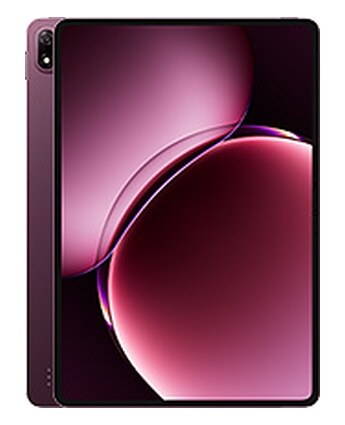
The Xiaomi Pad 9 Pro Max is not trying to be just another Android tablet. With a huge 13.3-inch display, a powerful 3nm XRing O3 chipset, up to 16GB of RAM, 1TB of UFS 4.1 storage and a massive 12,000mAh battery, Xiaomi has built this tablet for people who want a serious large-screen device for work, entertainment and demanding applications.
It also arrives with Android 17 and HyperOS 4, supports magnetic stylus input, offers an unusually fast 144Hz display and packs eight speakers with Dolby Atmos. For Nigerian students, professionals, creatives and anyone who wants a tablet that can replace some laptop tasks, those specifications make the Pad 9 Pro Max particularly interesting.
But there is a catch: this is a Wi-Fi-only tablet with no cellular connectivity, and its large 13.3-inch form factor makes it much more of a desktop-style productivity device than something you casually carry around like a phone. So, does the Xiaomi Pad 9 Pro Max justify its premium price in Nigeria, and who is it actually designed for?
Xiaomi Pad 9 Pro Max Price in Nigeria
The Xiaomi Pad 9 Pro Max is listed at about €620 internationally. Its Nigerian price will naturally be higher or lower depending on the exchange rate at the time of import, shipping costs, import expenses, retailer margins and the storage configuration being sold.
Based on its international positioning, Nigerian buyers can expect the Xiaomi Pad 9 Pro Max to sell in the region of ₦800,000 to ₦1,300,000, depending on the retailer and configuration.
The tablet comes in several combinations, starting with 256GB storage and 8GB RAM and going all the way to 1TB storage with 16GB RAM. The higher-capacity versions will command a considerably higher price.
Because there is no microSD card slot, storage choice is important. Someone buying the tablet primarily for documents, browsing and streaming may be perfectly comfortable with 256GB, while video editors, designers and users who keep large files locally may have a reason to consider the 512GB or 1TB versions.
What Makes the Xiaomi Pad 9 Pro Max Different?
The Pad 9 Pro Max sits in an interesting part of the tablet market. It has a display much larger than the typical 10- or 11-inch Android tablet, but it remains considerably more portable than a traditional laptop.
Its 3:2 aspect ratio is particularly relevant for productivity. Compared with a wider 16:10 entertainment-focused tablet, the taller screen provides more vertical space for documents, web pages, spreadsheets and multitasking.
Then there is the hardware. The XRing O3 is built on a 3nm process and is paired with up to 16GB of RAM and UFS 4.1 storage. This gives the tablet considerably more headroom than entry-level Android tablets.
Xiaomi Pad 9 Pro Max Full Specifications
Network and SIM
- Cellular connectivity: None
- SIM: Not supported
- Wi-Fi: Yes
- GPS/GNSS: No
- NFC: No
The Xiaomi Pad 9 Pro Max is a Wi-Fi-only tablet. It does not have cellular connectivity, a SIM card slot or eSIM support.
For Nigerian users, this means the tablet will rely on Wi-Fi from a home broadband connection, office network, school network or a phone’s hotspot when mobile data is required.
That is an important consideration because the tablet cannot connect directly to an MTN, Airtel, Glo or 9mobile mobile-data network.
Display
- Display type: IPS LCD
- Size: 13.3 inches
- Resolution: 3408 × 2272 pixels
- Aspect ratio: 3:2
- Pixel density: Approximately 308 ppi
- Refresh rate: 144Hz
- Colour depth: 68 billion colours
- HDR10
- Dolby Vision
- HDR Vivid
- Peak brightness: 1000 nits
- Screen-to-body ratio: Approximately 87.6%
The 13.3-inch screen is arguably the Pad 9 Pro Max’s defining physical feature.
Rather than using an OLED panel, Xiaomi has opted for a high-resolution IPS LCD. That means buyers shouldn’t expect the same deep blacks associated with OLED technology, but the tablet still offers a very sharp image, a high refresh rate and support for modern HDR standards.
The 144Hz refresh rate should make scrolling, animations and supported games look noticeably smoother. It can also make stylus movement feel more fluid when taking notes or drawing.
The 3:2 aspect ratio is another major advantage for productivity. Documents and web pages fit naturally onto the taller display, reducing the amount of unnecessary horizontal space that wider video-focused screens sometimes leave when working.
Performance: XRing O3 and Up to 16GB RAM
The Xiaomi Pad 9 Pro Max is powered by the XRing O3, a 3nm chipset with a 10-core CPU reaching up to 4.35GHz. Graphics are handled by the Arm G2-Ultra NX MC16 GPU.
Memory options are extensive:
- 256GB + 8GB RAM
- 256GB + 12GB RAM
- 256GB + 16GB RAM
- 512GB + 12GB RAM
- 512GB + 16GB RAM
- 1TB + 16GB RAM
All configurations use UFS 4.1 storage.
This is considerably more storage and memory than most ordinary tablets need. The 16GB RAM versions are particularly suited to users who intend to multitask heavily or run demanding applications.
For everyday activities such as Microsoft Office-style productivity, web browsing, YouTube, document editing and video calls, the hardware should have plenty of capacity.
The bigger question is software optimisation. Raw specifications don’t automatically make every Android application behave like desktop software. The Pad 9 Pro Max’s real productivity potential therefore depends partly on how well HyperOS 4 handles large-screen multitasking and the applications you use.
Gaming on the Xiaomi Pad 9 Pro Max
Gaming is another area where the Pad 9 Pro Max’s hardware becomes interesting.
The combination of the XRing O3 processor, G2-Ultra graphics, up to 16GB RAM and 144Hz display provides a strong hardware foundation for demanding Android games.
Titles such as PUBG Mobile and Call of Duty Mobile should benefit from the tablet’s large display. Having substantially more screen area than a smartphone can make controls easier to see, while the high refresh rate can make compatible games feel smoother.
The 12,000mAh battery is also useful for extended gaming sessions.
However, the tablet’s large display also means that sustained gaming can generate heat and consume more power than lighter workloads. The exact gaming experience will depend on how individual titles are optimised for the chipset and whether they support higher refresh rates.
This is a device that can be used seriously for gaming, but its larger physical size means it isn’t as convenient to hold for hours as a conventional smartphone.
Camera Performance
Tablets are rarely purchased primarily for photography, and the Xiaomi Pad 9 Pro Max follows that trend.
The rear camera is a 50MP sensor with an f/1.8 aperture, PDAF, a colour spectrum sensor, LED flash and HDR. It can record video in 4K at 30fps and 60fps, as well as 1080p at 30fps and 60fps.
That is more than enough for scanning documents, taking photographs during meetings or classes, recording quick clips and handling occasional photography.
The 32MP ultrawide front camera is arguably more important for a tablet. Its 19mm-equivalent ultrawide perspective is better suited to video calls because it can accommodate more people in the frame.
The front camera records 1080p video at 30fps.
For students attending online classes or professionals using the tablet for meetings, the wide front camera should be more useful than a conventional narrow selfie camera.
Battery Life and 120W Charging
The Pad 9 Pro Max carries a 12,000mAh battery, giving it a very substantial power reserve.
For a large-screen tablet with a 13.3-inch display and high-performance processor, battery capacity matters. Streaming video, gaming and productivity applications can all consume considerable power, especially when the display is running at a high refresh rate.
The tablet supports 120W wired charging, along with PD3.0 and QC2. It also supports 22.5W reverse wired charging, allowing it to provide power to compatible devices.
The 120W charging capability is particularly useful here because charging a 12,000mAh battery at ordinary tablet speeds could take a long time.
Actual battery endurance will depend on brightness, refresh rate, workload, Wi-Fi usage and applications, but the large capacity gives the Pad 9 Pro Max a strong foundation for long sessions away from a charger.
Is the Xiaomi Pad 9 Pro Max Good for Students?
For students, the Pad 9 Pro Max could be particularly useful if the price fits the budget.
The 13.3-inch 3:2 display provides plenty of space for reading PDFs, viewing lecture slides, writing notes and working with documents. Magnetic stylus support also makes handwritten notes and annotations possible.
The large display can be especially useful when working with multiple documents side by side.
However, Nigerian students should remember that this is not a cellular tablet. If you’re moving around campus and don’t have reliable Wi-Fi, you’ll need to connect it to a smartphone hotspot to access mobile data.
For someone who already owns a smartphone with a reliable data plan, that may not be a major problem.
Productivity and Laptop Replacement Potential
The Pad 9 Pro Max is much closer to a productivity workstation than a basic entertainment tablet.
The 3:2 display is well suited to documents, while USB Type-C 3.2 Gen 2 provides faster wired connectivity than basic USB 2.0 tablet ports. It also supports DisplayPort, giving the tablet the ability to connect to compatible external displays.
That can be useful for people who want a larger workstation when working from home, although the actual usefulness depends on the applications and accessories being used.
The magnetic stylus support further expands its usefulness for note-taking, drawing and annotation.
Still, users who rely heavily on specialised Windows or macOS applications should not assume that an Android tablet can completely replace a laptop. Web and Android versions of professional applications can have different features from their desktop counterparts.
Eight Speakers and Dolby Atmos
The Xiaomi Pad 9 Pro Max includes eight speakers with Dolby Atmos, which is one of its strongest entertainment features.
A tablet this large has enough physical space to provide a more immersive audio setup than a typical phone.
Whether you’re watching YouTube, Netflix, listening to music or playing games, the eight-speaker system should provide a much fuller experience than the basic speaker arrangement found on inexpensive tablets.
There is no 3.5mm headphone jack, but the tablet supports 24-bit/192kHz Hi-Res and Hi-Res wireless audio.
Build Quality and Portability
The tablet measures 296.2 × 203.1 × 5.7mm and weighs approximately 645g or 653g, depending on the version.
Despite its large screen, the 5.7mm thickness is remarkably slim.
The body uses an aluminium frame and aluminium back, with glass on the front. This gives the tablet a more premium feel than plastic-bodied budget tablets.
However, the 13.3-inch display means portability remains relative. It is easy enough to carry in a suitable laptop or tablet bag, but it isn’t something most people will casually hold in one hand for extended periods.
At around 650g, it is closer to a lightweight laptop in carrying experience than a small tablet.
Connectivity and Ports
The Xiaomi Pad 9 Pro Max has a strong selection of modern connectivity options:
- Wi-Fi 802.11 a/b/g/n/ac/6/7
- Dual-band Wi-Fi
- Wi-Fi Direct
- Bluetooth 6.0
- A2DP
- LE
- LHDC 5
- USB Type-C 3.2 Gen 2
- OTG
- DisplayPort
- Infrared port
The inclusion of Wi-Fi 7 support is particularly useful for buyers with compatible routers and high-speed broadband connections.
USB Type-C 3.2 Gen 2 and DisplayPort also make the tablet more flexible for productivity and external-display setups.
There is no NFC, GPS or cellular connectivity.
Software and Long-Term Experience
The Xiaomi Pad 9 Pro Max runs Android 17 with HyperOS 4.
That gives it a modern software foundation and access to the Android application ecosystem.
HyperOS 4 is particularly important on a device this large because a tablet’s usefulness depends heavily on how well the software uses the available screen area. Multitasking, split-screen applications, floating windows and tablet-optimised interfaces can make a much bigger difference here than on a smartphone.
For buyers who want to use the tablet primarily for entertainment, browsing and documents, the software should provide a familiar Android experience while taking advantage of the larger display.
Xiaomi Pad 9 Pro Max Pros and Cons
Pros
- Large 13.3-inch high-resolution display
- 144Hz refresh rate
- 3:2 aspect ratio is excellent for productivity
- Dolby Vision and HDR10 support
- 3nm XRing O3 chipset
- Up to 16GB RAM
- Up to 1TB UFS 4.1 storage
- Huge 12,000mAh battery
- 120W wired charging
- Eight speakers with Dolby Atmos
- 50MP rear camera with 4K/60fps recording
- 32MP ultrawide front camera
- Wi-Fi 7 support
- Bluetooth 6.0
- USB 3.2 Gen 2 with DisplayPort
- Premium aluminium construction
- Magnetic stylus support
- Android 17 and HyperOS 4
Cons
- No cellular connectivity
- No SIM or eSIM support
- No GPS
- No NFC
- No microSD card slot
- No 3.5mm headphone jack
- Large size makes it less convenient to hold for long periods
- IPS LCD rather than OLED
- Higher storage configurations can become expensive
Xiaomi Pad 9 Pro Max vs Samsung Galaxy Tab
The Xiaomi Pad 9 Pro Max enters a segment where Samsung’s Galaxy Tab range is an obvious alternative.
The two approaches can be quite different. Xiaomi has equipped the Pad 9 Pro Max with an unusually large 13.3-inch display, 144Hz refresh rate, 12,000mAh battery and 120W charging.
Samsung’s premium tablets, meanwhile, are known for their mature tablet software, accessory ecosystem and integration with other Galaxy devices.
For someone already using Samsung phones, watches and other Galaxy products, ecosystem features can be important. The Xiaomi tablet makes a different argument: large-screen hardware, very high charging speeds, substantial battery capacity and strong specifications.
The right choice depends on whether your priorities lean more toward Xiaomi’s hardware package or Samsung’s broader tablet ecosystem.
Xiaomi Pad 9 Pro Max vs iPad
Apple’s iPad lineup is another major consideration for anyone spending premium money on a large tablet.
The Xiaomi Pad 9 Pro Max has several hardware advantages on paper, including its 144Hz refresh rate, 120W charging and 12,000mAh battery. It also provides up to 1TB of internal storage and up to 16GB of RAM.
The iPad advantage is primarily the iPadOS ecosystem and the enormous selection of tablet-optimised applications and professional creative software.
For users already invested in Android, Xiaomi’s tablet can provide a more familiar environment and easier integration with Android phones. Users who depend on specific iPad applications may have a different set of priorities.
Who Should Buy the Xiaomi Pad 9 Pro Max?
The Xiaomi Pad 9 Pro Max is best suited to people who need a large Android workspace rather than simply a bigger phone.
It makes particular sense for:
- University students
- Professionals who work with documents
- Digital artists and note-takers
- People who consume a lot of video content
- Mobile gamers who prefer large screens
- Remote workers
- Users who want a tablet for multitasking
- People who need substantial local storage
- Buyers who want a high-refresh-rate large display
It may not be ideal for someone who needs mobile connectivity built directly into the tablet. Since there is no SIM, eSIM or cellular modem, the device cannot replace a phone’s mobile-data connection.
It is also excessive for someone whose tablet needs are limited to occasional YouTube viewing and web browsing. A much cheaper tablet can handle those tasks.
Frequently Asked Questions
Does the Xiaomi Pad 9 Pro Max have SIM support?
No. The Xiaomi Pad 9 Pro Max has no cellular connectivity and does not support a SIM or eSIM. Internet access therefore depends on Wi-Fi or a connected hotspot.
How big is the Xiaomi Pad 9 Pro Max screen?
It has a 13.3-inch IPS LCD display with a 3408 × 2272 resolution, 3:2 aspect ratio and 144Hz refresh rate.
Does the Xiaomi Pad 9 Pro Max support a stylus?
Yes. The tablet supports a magnetic stylus, making it suitable for handwritten notes, drawing and document annotation.
Does the Xiaomi Pad 9 Pro Max have a memory card slot?
No. There is no microSD card slot. Storage options range from 256GB to 1TB.
Is the Xiaomi Pad 9 Pro Max good for gaming?
Yes. Its XRing O3 chipset, high-end GPU, up to 16GB RAM and 144Hz display provide a strong foundation for demanding Android games. The large screen and 12,000mAh battery are also useful for extended gaming sessions.
Does the Xiaomi Pad 9 Pro Max have GPS?
No. The supplied specifications list no positioning system. This is worth remembering if you intend to use the tablet for navigation.
Final Verdict
The Xiaomi Pad 9 Pro Max is a serious Android tablet built for users who want more than casual browsing and streaming.
Its 13.3-inch 144Hz display, 3:2 aspect ratio, 3nm XRing O3 processor, up to 16GB RAM, UFS 4.1 storage, 12,000mAh battery and 120W charging give it the hardware to handle demanding workloads. The eight-speaker Dolby Atmos system also makes it an attractive entertainment device.
Its biggest weakness is not performance. It is the lack of cellular connectivity. For Nigerian users who want to put a SIM card inside a tablet and use MTN, Airtel, Glo or 9mobile data directly, the Pad 9 Pro Max isn’t designed for that. A smartphone hotspot or Wi-Fi connection will be necessary.
The tablet’s large size is another consideration. The 13.3-inch screen is excellent for documents, multitasking and media, but it also means this is a device you’ll probably carry in a bag rather than casually hold everywhere.
At an estimated Nigerian price of around ₦800,000–₦1,300,000, the Xiaomi Pad 9 Pro Max is aimed at buyers who will actually use its premium hardware. Students working with PDFs and notes, professionals handling documents, creatives, gamers and heavy media users can make much better use of its capabilities than someone who only needs a basic tablet for YouTube.
For the right user, the Pad 9 Pro Max offers a compelling combination of large-screen productivity, powerful hardware, huge battery capacity and extremely fast charging in a premium Android tablet package.