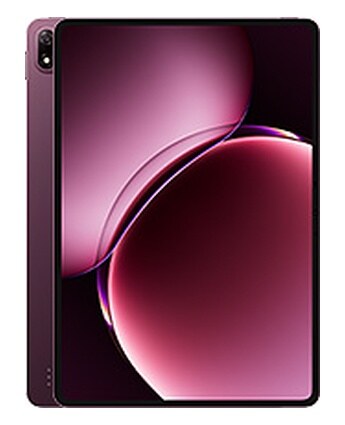
The Xiaomi Pad 9 is a powerful Android tablet aimed at users who want something more capable than a basic entertainment tablet without moving all the way into the premium flagship-tablet category. With an 11.2-inch 144Hz display, Snapdragon 8s Gen 4 processor, up to 12GB RAM, a 9,720mAh battery and Android 17 with HyperOS 4, it has enough hardware for demanding everyday use.
Announced and released on September 23, 2026, the Xiaomi Pad 9 also brings a 3:2 display ratio that makes it particularly interesting for students, writers and professionals who spend time reading documents or working with productivity applications.
It is not a cellular tablet, so there is no SIM card or mobile network support. Instead, Xiaomi focuses on Wi-Fi 6/7 connectivity, a large high-resolution screen, powerful processing and stylus support.
At around €390 internationally, the Xiaomi Pad 9 sits in an increasingly competitive part of the tablet market. So, is it worth considering for Nigerian buyers, and can it genuinely replace a laptop for some users?
Let’s look at its specifications, display, performance, gaming capability, battery life, cameras and everyday usability.
Xiaomi Pad 9 Price in Nigeria
The Xiaomi Pad 9 has an international price of about €390 based on the supplied specifications.
Its Nigerian price will depend on the exchange rate, importation and shipping costs, retailer margins and the specific memory configuration. Since the tablet does not have cellular connectivity, buyers should also remember that the Wi-Fi version requires a separate internet connection rather than a SIM card.
Based on its international positioning, the Xiaomi Pad 9 is expected to cost around ₦620,000 to ₦780,000 in Nigeria.
The 128GB/8GB version should generally be closer to the lower end, while the 256GB/12GB configuration is likely to cost more.
These figures are estimates rather than a fixed official Nigerian retail price.
Xiaomi Pad 9 Price in Nigeria at a Glance
| Model |
Expected Nigerian Price |
| Xiaomi Pad 9 128GB/8GB |
₦550,000 – ₦680,000 |
| Xiaomi Pad 9 256GB/8GB |
₦620,000 – ₦730,000 |
| Xiaomi Pad 9 256GB/12GB |
₦700,000 – ₦780,000 |
The final retail price can change depending on availability, exchange rates and the seller.
11.2-Inch 144Hz Display for Work and Entertainment
The display is one of the Xiaomi Pad 9’s strongest features.
It uses an 11.2-inch IPS LCD panel with a sharp 3200 x 2136 resolution and a 3:2 aspect ratio. At around 344 pixels per inch, text and images should look crisp, which is especially useful when reading documents, browsing websites or working with spreadsheets.
The 144Hz refresh rate is another major advantage.
While 144Hz is not essential for watching movies or reading documents, it makes scrolling and supported animations feel smoother. It can also make gaming more responsive when the application supports higher refresh rates.
The tablet supports HDR10, Dolby Vision and HDR Vivid, with a peak brightness of 800 nits.
The 3:2 aspect ratio is particularly interesting for productivity. Compared with a traditional widescreen tablet, the taller working area provides more vertical space when reading documents and browsing websites.
For students who spend hours reading PDFs, lecture materials and online resources, this could be more useful than an ultra-wide entertainment-focused tablet.
Snapdragon 8s Gen 4 Performance
Powering the Xiaomi Pad 9 is the Snapdragon 8s Gen 4, built using a 4nm manufacturing process.
The processor has an octa-core configuration featuring a Cortex-X4 performance core running at up to 3.21GHz, supported by multiple Cortex-A720 cores. Graphics are handled by the Adreno 825 GPU.
This is a substantial amount of processing power for a tablet in this category.
Normal activities such as web browsing, YouTube, Microsoft Office applications, document editing, social media and video calls should be comfortably within its capabilities.
The hardware should also give the tablet enough headroom for heavier multitasking. Users can switch between demanding applications without needing to treat the tablet like a basic media device.
The available 8GB and 12GB RAM configurations further improve multitasking potential.
Xiaomi Pad 9 Gaming Performance
The Snapdragon 8s Gen 4 and Adreno 825 make the Xiaomi Pad 9 considerably more interesting for gaming than many conventional Android tablets.
Games such as PUBG Mobile and Call of Duty Mobile should have plenty of processing power available, while demanding titles such as Genshin Impact should also be within the tablet’s capabilities.
The 144Hz display can make supported games feel smoother, although the actual frame rate depends on the game and its optimization.
The large 11.2-inch screen can also provide a useful advantage in games that benefit from larger controls and a wider view.
However, the tablet is still considerably larger than a conventional smartphone. That can make some touch-based games less comfortable to hold for long sessions.
For gaming at home, though, the combination of the powerful Snapdragon processor, high-refresh-rate display and four-speaker audio makes the Pad 9 a capable entertainment machine.
13MP Rear Camera
Tablet cameras are rarely the main reason people buy a device, and Xiaomi appears to have treated the Pad 9’s camera system accordingly.
The tablet has a 13MP rear camera with a colour spectrum sensor, LED flash and HDR.
It can record video at 4K 30fps and 1080p at 30 or 60fps.
The rear camera should be adequate for scanning documents, taking quick photographs, recording casual videos and capturing information when a smartphone is not convenient.
However, buyers should not expect flagship-level smartphone photography from the Pad 9.
The large size of the tablet also makes it less practical for taking photographs compared with a smartphone.
8MP Front Camera for Video Calls
The front-facing camera is an 8MP sensor capable of recording 1080p video at 30fps.
For Google Meet, Zoom, Microsoft Teams and other video-calling applications, it should provide a suitable experience under good lighting.
The front camera becomes particularly useful when the tablet is paired with a stand or keyboard for desk-based work.
Students can also use it for online classes, while professionals can use it for remote meetings without needing to carry a laptop.
9,720mAh Battery for Long Sessions
The Xiaomi Pad 9 comes with a 9,720mAh battery, which is one of its strongest practical features.
A battery of this size should give the tablet plenty of endurance for everyday browsing, streaming, reading and productivity.
Of course, actual battery life will vary significantly depending on screen brightness, refresh rate, gaming, wireless connectivity and application usage.
The 144Hz display and powerful Snapdragon processor can consume considerably more power during demanding workloads, but the large battery provides a strong starting point.
Charging is supported at 45W, with PD 3.0 and QC3+ support.
The tablet also supports 22.5W reverse wired charging, allowing it to share some of its battery with another compatible device.
That feature could be useful during travel when another phone or accessory needs emergency power.
Four Speakers With Dolby Atmos
Xiaomi has equipped the Pad 9 with four speakers and Dolby Atmos.
This is important for a tablet because the device is likely to be used for movies, YouTube, music, gaming and video calls.
Four speakers should provide a fuller stereo experience than the basic speaker arrangements found on cheaper tablets.
The tablet also supports 24-bit/192kHz Hi-Res audio and Hi-Res wireless audio.
There is no 3.5mm headphone jack, so wired headphones will need a USB-C connection or adapter.
Stylus Support Makes It More Useful for Students
One of the Xiaomi Pad 9’s practical advantages is stylus support.
For students, a compatible stylus can turn the tablet into a digital notebook for handwriting, annotations and diagram work.
It can also be useful for professionals who need to mark up documents, sign files, sketch ideas or make quick handwritten notes.
The 3:2 display makes this even more relevant because the screen provides a relatively tall workspace for documents.
A student studying at a Nigerian university could use the Pad 9 for lecture PDFs, online research, note-taking, presentations and entertainment without carrying a full-size laptop everywhere.
Can Xiaomi Pad 9 Replace a Laptop?
For some users, yes—but not for everyone.
The Snapdragon 8s Gen 4 provides enough performance for many everyday productivity tasks, while the large high-resolution display provides plenty of working space.
With a compatible keyboard and stylus, the tablet can become a useful workstation for writing documents, browsing the web, attending online meetings, taking notes and managing basic office tasks.
However, Android still has limitations compared with Windows or macOS for certain professional workflows.
Users who rely on specialized desktop applications, advanced video editing software, full desktop development environments or other Windows/macOS-only tools should not treat the Pad 9 as a complete laptop replacement.
For students and general productivity users, however, it can cover a surprisingly large portion of everyday computing needs.
HyperOS 4 and Android 17
The Xiaomi Pad 9 launches with Android 17 and HyperOS 4.
The tablet-oriented software experience is important because a large screen needs more than simply stretching a phone interface.
HyperOS can make better use of the additional display area for multitasking and larger layouts, while the 3:2 screen provides plenty of room for documents and applications.
Because this is a newly released 2026 tablet, buyers should still check Xiaomi’s official software-support policy for the exact model if long-term Android upgrades are a major purchasing factor.
Wi-Fi 7 but No Cellular Connectivity
The Xiaomi Pad 9 does not support cellular networks.
There is no SIM card slot, and there is no 4G or 5G modem.
Instead, the tablet supports dual-band Wi-Fi 6/7 and Wi-Fi Direct, giving it fast wireless connectivity when connected to a compatible router or hotspot.
For Nigerian users, this means internet access on the move will generally require a smartphone hotspot, MiFi or another Wi-Fi source.
That is worth considering before buying. If you regularly travel without access to Wi-Fi and want a tablet that can connect directly to MTN, Airtel, Glo or 9mobile data, this particular model is not designed for that.
The tablet does include Bluetooth 6.0 and an infrared port, although it does not have NFC or built-in positioning/GPS.
Design: Thin Aluminium Body
At 5.8mm thick, the Xiaomi Pad 9 is impressively slim.
It measures 251.2 x 173.4mm and weighs between 485g and 494g depending on the version.
The aluminium frame and aluminium back give it a more premium construction than plastic-bodied budget tablets.
The relatively low weight should also make it easier to carry between lectures, meetings, home and the office.
There are four colour options: Gray, Silver, Green and Pink.
The overall design is therefore more premium than what its price positioning might initially suggest.
Xiaomi Pad 9 vs Samsung Galaxy Tab
The Xiaomi Pad 9 competes with Samsung’s Galaxy Tab range by focusing strongly on performance, display quality and value.
Its Snapdragon 8s Gen 4 chipset gives it enough power for demanding applications and gaming, while the 144Hz display is unusually fast for a tablet.
Samsung’s tablets may appeal more strongly to buyers who already use Galaxy phones and want deeper integration with Samsung’s ecosystem.
For Nigerian buyers, availability, warranty and accessory support should also be considered alongside the specification sheet.
The Xiaomi Pad 9’s stylus support and large 3:2 display make it particularly interesting for students and productivity users, while Samsung’s broader ecosystem can be important for users already invested in Galaxy devices.
Xiaomi Pad 9 vs iPad
The Xiaomi Pad 9 also competes indirectly with Apple’s iPad lineup.
The two platforms approach tablets differently. Xiaomi offers Android with HyperOS 4, a 144Hz display, Snapdragon 8s Gen 4 performance and a large 9,720mAh battery.
Apple’s iPad lineup, meanwhile, benefits from iPadOS and Apple’s extensive tablet application ecosystem.
For someone already using Android phones and Google services, the Xiaomi Pad 9 can provide a more natural continuation of that ecosystem.
An iPad may be more appealing to someone already invested in Apple devices and applications.
The important point is that buyers should compare the exact iPad model, storage capacity and local pricing rather than comparing the Xiaomi Pad 9 against the entire iPad range as if they were one device.
Pros and Cons of Xiaomi Pad 9
Pros
- Powerful Snapdragon 8s Gen 4 chipset
- 11.2-inch high-resolution display
- 144Hz refresh rate
- 3:2 aspect ratio
- HDR10, Dolby Vision and HDR Vivid
- 3200 x 2136 resolution
- Up to 12GB RAM
- Up to 256GB storage
- Fast UFS 4.1 storage on higher-capacity models
- 9,720mAh battery
- 45W charging
- 22.5W reverse wired charging
- Four speakers with Dolby Atmos
- Stylus support
- Wi-Fi 7
- USB Type-C 3.2
- Premium aluminium construction
- Android 17 with HyperOS 4
Cons
- No cellular connectivity
- No SIM card slot
- No GPS
- No NFC
- No microSD card slot
- No 3.5mm headphone jack
- Cameras are fairly basic for a premium tablet
- IPS LCD rather than AMOLED
- 45W charging is not particularly fast for such a large battery
- Keyboard and stylus accessories may add to the total cost
Who Should Buy the Xiaomi Pad 9?
The Xiaomi Pad 9 is particularly suitable for students, professionals, content consumers, gamers and Android users who want a powerful tablet without paying flagship iPad Pro-level prices.
Students can use it for PDFs, online classes, note-taking, research and entertainment.
Professionals can use it for documents, presentations, video meetings, browsing and light productivity.
Gamers get a powerful Snapdragon chipset and 144Hz display, while movie and YouTube viewers benefit from the large high-resolution panel and four-speaker Dolby Atmos setup.
However, buyers who require cellular connectivity should look elsewhere or consider using a dedicated hotspot.
Likewise, users who need professional desktop software should not assume that the Pad 9 can completely replace a Windows laptop.
Xiaomi Pad 9 FAQs
How much is Xiaomi Pad 9 in Nigeria?
The Xiaomi Pad 9 is expected to cost around ₦620,000 to ₦780,000 in Nigeria, depending on the RAM and storage configuration, exchange rate and retailer.
Does Xiaomi Pad 9 have a SIM card slot?
No. The Xiaomi Pad 9 has no cellular connectivity and no SIM card slot. It relies on Wi-Fi for internet access.
Is Xiaomi Pad 9 good for gaming?
Yes. The Snapdragon 8s Gen 4 and Adreno 825 provide strong performance for Android gaming. The 144Hz display also makes supported games and system animations smoother.
Does Xiaomi Pad 9 support a stylus?
Yes. The Xiaomi Pad 9 supports a compatible stylus, making it useful for handwriting, drawing, document annotation and note-taking.
What is the Xiaomi Pad 9 battery capacity?
The tablet has a 9,720mAh battery and supports 45W wired charging, along with 22.5W reverse wired charging.
Does Xiaomi Pad 9 have GPS?
No. The supplied specifications do not list GPS or other positioning systems.
Does Xiaomi Pad 9 support a memory card?
No. There is no microSD card slot. Buyers should therefore choose their storage configuration carefully.
Final Verdict: Is Xiaomi Pad 9 Worth Buying?
The Xiaomi Pad 9 is a well-rounded performance-focused Android tablet with a particularly attractive combination of screen quality, processing power and battery capacity.
Its 11.2-inch 144Hz display, 3200 x 2136 resolution and 3:2 aspect ratio make it suitable for both entertainment and productivity. Meanwhile, the Snapdragon 8s Gen 4 gives it substantially more performance than a typical budget tablet.
The 9,720mAh battery, four Dolby Atmos speakers, stylus support and Wi-Fi 7 further strengthen the package.
There are some clear limitations. This is a Wi-Fi-only tablet, there is no GPS or NFC, storage cannot be expanded with a microSD card, and the cameras are designed more for basic tablet photography and video calls than serious photography.
For Nigerian students, professionals and Android users who primarily need a large, powerful Wi-Fi tablet for studying, entertainment, gaming and productivity, the Xiaomi Pad 9 offers a compelling specification package at its expected price.
The main thing to remember before buying is that accessories such as a keyboard or stylus can increase the total cost, so buyers should factor those into the budget if they intend to use the Pad 9 as a laptop-style productivity device.