- PRODUCTS
- Redmi Phones
- Xiaomi 18 Pro Max Price in Nigeria
Xiaomi 18 Pro Max Price in Nigeria

-
DISPLAY: 6.9 inches, 116.2 cm2 (~91.6% screen-to-body ratio)
-
CAMERA: 200 MP, f/1.7, 23mm (wide),
-
BATTERY: Si/C Li-Ion 8500 mAh
-
OS: Android 17, HyperOS 4
-
CHIPSET: Qualcomm SM8975 Snapdragon 8 Elite Extreme Gen 6 (2 nm)
-
RAM: 256GB 12GB RAM, 512GB 12GB RAM, 512GB 16GB RAM, 1TB 16GB RAM
-
SIM: Nano-SIM + Nano-SIM
The Xiaomi 18 Pro Max Price in Nigeria is 1,500,000 Naira, and this includes Lagos, Abuja, Kano, Rivers, Ogun, Oyo, Delta, Kaduna, Edo, Enugu, PortHarcourt, Ibadan, Benin, Owerri, Warri.
The Xiaomi 18 Pro Max is a premium smartphone built for people who want flagship-level performance, advanced photography, a high-quality display and a battery that can support demanding daily use. Released on September 23, 2026, it combines a powerful Snapdragon processor with a 6.9-inch LTPO AMOLED display, a secondary screen on the back and a triple-camera system led by a 200MP main sensor.
There is more to this phone than impressive numbers on a specification sheet. Its 200MP periscope telephoto camera offers 3.2x optical zoom, while the main display supports Dolby Vision, HDR10+ and a 120Hz refresh rate. Xiaomi has also included an 8,500mAh silicon-carbon battery, 100W wired charging and 50W wireless charging, making the device particularly interesting for users who want flagship features without sacrificing battery capacity.
However, the Xiaomi 18 Pro Max is also a large, heavy and expensive smartphone. Its value will depend on how well its camera system, secondary display, processor and battery perform in everyday situations.
For Nigerian buyers, the expected local price is another important consideration. This review covers the Xiaomi 18 Pro Max’s specifications, camera capabilities, gaming potential, battery, connectivity and the features that may make it worth considering in 2026.
Xiaomi 18 Pro Max Price in Nigeria
The Xiaomi 18 Pro Max has a listed European price of approximately €920. Based on that reference price, its expected Nigerian retail cost could fall between ₦1,700,000 and ₦2,100,000, depending on the exchange rate, import expenses, retailer margins and storage configuration.
This is a provisional estimate, not a verified Nigerian shop price. The actual amount may be higher or lower when local stock becomes available.
| Item | Details |
|---|---|
| Expected price in Nigeria | ₦1,500,000–₦2,100,000 |
| Listed European price | About €920 |
| Release date | September 23, 2026 |
| Base storage | 256GB |
| Maximum storage | 1TB |
| RAM options | 12GB or 16GB |
| Network | 4G LTE and 5G |
| Expected market position | Premium flagship |
The phone is available in several memory configurations, ranging from 256GB storage with 12GB RAM to 1TB storage with 16GB RAM. The 512GB and 1TB versions may appeal to buyers who record a lot of high-resolution video or keep large photo and application libraries on their devices.
Before buying, confirm the exact storage configuration, model number, warranty and regional variant. Imported phones can have different prices and support arrangements, even when their names are identical.
Design and Build Quality
The Xiaomi 18 Pro Max has a large body measuring 163.4 × 77.6 × 8.4mm. Its weight is listed as either 235g or 240g, depending on the version. This places it firmly in the large, premium-phone category rather than the compact flagship segment.
The aluminium frame and glass front give it the materials expected of an expensive smartphone. Xiaomi’s Dragon Crystal Glass 3 protection is listed for the front, while the IP68 rating provides additional protection against dust and water under specified testing conditions.
Its IP68 rating is particularly useful for people who want extra reassurance against accidental spills or brief water exposure. The listed immersion rating reaches up to six metres for 30 minutes under specified conditions. Nevertheless, water resistance is not permanent, and damage, wear or repairs can affect the seals. It is best to avoid deliberately testing these limits.
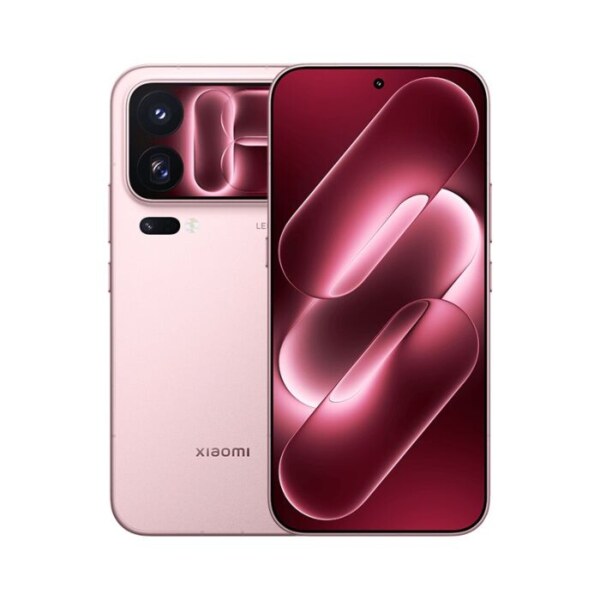
The large rear camera system is another defining part of the design. Three substantial camera sensors occupy the back, including a 200MP main camera and a 200MP periscope telephoto unit. This hardware will likely appeal to photography enthusiasts, although the camera arrangement may make the phone feel less balanced when held without a case.
The secondary display also changes the appearance and functionality of the rear panel. Rather than treating the back solely as a place for cameras and a finish, Xiaomi has made it another interactive surface.
There is a practical trade-off, however. At up to 240g, the phone may feel heavy during extended one-handed use. Its dimensions can also make it less comfortable for people with smaller hands or those who prefer lightweight devices.
Display Review: A 6.9-Inch LTPO AMOLED Screen
The Xiaomi 18 Pro Max features a 6.9-inch LTPO AMOLED display with a resolution of 1208 × 2624 pixels. It supports a 120Hz refresh rate, Dolby Vision, HDR10+, HDR Vivid and a wide BT.2020 colour range.
The screen is designed for users who consume a lot of visual content. Its large size provides plenty of room for films, games, photographs, reading and multitasking. AMOLED technology can deliver deep blacks and strong contrast because individual pixels can turn off when displaying black.
The 120Hz refresh rate can make scrolling and supported animations feel smoother than they do on a conventional 60Hz screen. LTPO technology can also allow the refresh rate to adjust according to what is displayed, potentially reducing unnecessary power consumption during less demanding tasks.
The listed peak brightness of 4,000 nits should help improve visibility in bright conditions. However, peak brightness figures do not necessarily represent the brightness available across the entire display at all times. Actual performance depends on the screen area being illuminated, content, temperature and automatic brightness controls.
Dolby Vision and HDR10+ support are also useful for compatible films and streaming services. When content is mastered for these formats, the display can reproduce a wider range of brightness and colour than standard dynamic range content.
The resolution is not the highest available among all premium phones, but it should provide a detailed image at normal viewing distances. The listed pixel density is approximately 418 pixels per inch, which is suitable for text, photographs and high-quality video.
For everyday use, the main display appears to be one of the Xiaomi 18 Pro Max’s strongest features. Its size, contrast, refresh rate and HDR support make it well suited to entertainment, gaming and general productivity.
The Rear Display: More Than a Decorative Feature
One of the Xiaomi 18 Pro Max’s most distinctive features is its 2.9-inch secondary display on the back. This LTPO AMOLED panel has a resolution of 596 × 976 pixels and supports a 120Hz refresh rate, Dolby Vision and other HDR-related features listed for the display.
A rear screen can serve several practical purposes. Depending on Xiaomi’s software implementation, it may allow users to view notifications, check selected information, control music or interact with supported widgets without turning on the main display.
Its position can also be useful for photography. When the camera software supports it, a rear display allows the main cameras to be used for self-portraits and group photos while the subject checks the framing. That can be especially helpful because the main camera system has more hardware available than the front-facing camera.
However, the exact functions of the secondary display depend on the software. Buyers should check which widgets, applications, camera features and customisation options are supported on the retail version rather than assuming every function is available.
A rear screen also adds complexity. It can increase the number of components that may need protection, and users will have to consider both displays when choosing a case.
Still, it gives the Xiaomi 18 Pro Max a distinctive advantage over conventional smartphones. If Xiaomi provides useful software support, the rear display could become a feature that owners use regularly rather than simply an unusual design element.
Performance: Snapdragon 8 Elite Extreme Gen 6
The Xiaomi 18 Pro Max is listed with Qualcomm’s Snapdragon 8 Elite Extreme Gen 6 chipset, manufactured using a 2nm process. Its octa-core CPU includes a prime core clocked at up to 5.01GHz, alongside additional performance cores. Graphics are handled by the Adreno 850 GPU.
On paper, this is flagship-class hardware intended to handle demanding applications, intensive multitasking, high-end gaming and advanced imaging workloads. The combination of a powerful processor and fast UFS 4.1 storage should also help applications open quickly and large files transfer efficiently.
The available memory configurations start at 12GB RAM and extend to 16GB. For most users, 12GB should already provide substantial room for multitasking. The 16GB options may be more appealing to people who regularly switch between demanding applications or want additional memory headroom for future software.
Storage is equally generous. The phone comes with 256GB, 512GB or 1TB of internal capacity. Since there is no memory card slot, the larger versions are particularly useful for users who record high-resolution videos, download large games or keep years of photos on the device.
The processor should be well suited to editing photographs, processing high-resolution images and working with demanding applications. Its performance may also benefit advanced camera features that rely on computational photography and video processing.
Nevertheless, clock speeds and manufacturing technology do not tell the whole story. Actual performance depends on cooling, software optimisation, power limits and the workload being run. Independent benchmarks and sustained performance tests are needed to establish how the phone compares with competing flagship devices.
If the supplied specifications translate into strong real-world performance, the Xiaomi 18 Pro Max should appeal to users who expect a fast, responsive phone that can handle demanding tasks without feeling limited by ordinary midrange hardware.
Gaming Performance and Graphics
Gaming is one area where the Xiaomi 18 Pro Max’s hardware looks particularly promising. The listed Snapdragon processor and Adreno 850 GPU are designed for intensive graphics workloads, while the 120Hz main display can provide a smoother visual experience in compatible games.
Popular titles such as PUBG Mobile and Call of Duty: Mobile should be relevant choices for testing the phone. Other demanding games can help demonstrate how well the processor handles complex graphics, high-resolution assets and extended sessions.
However, it is important not to confuse a 120Hz display with guaranteed 120-frames-per-second gameplay. The game must support the relevant frame rate, and the hardware must sustain it under the selected graphics settings.
The large display can improve visibility by giving users more room to see in-game details and controls. At the same time, the phone’s weight may become noticeable during long sessions, especially for players who hold the device for several hours.
Heat management will also matter. Demanding games can place sustained pressure on the CPU and GPU, and a powerful chipset may reduce its speed if temperatures become too high. The phone’s actual cooling design and sustained frame-rate performance should be evaluated through independent tests.
The 8,500mAh battery is an advantage for longer gaming sessions, but high refresh rates, bright graphics and mobile data can still consume substantial power. For serious mobile gamers, the Xiaomi 18 Pro Max looks promising on paper, although independent gaming tests will be necessary to confirm its performance and thermal stability.
Camera Review: Triple Cameras with Two 200MP Sensors
The Xiaomi 18 Pro Max has a triple rear-camera system consisting of a 200MP main camera, a 200MP periscope telephoto camera and a 50MP ultrawide camera. This is one of the phone’s most ambitious features, particularly for people who want flexibility across different photography situations.
200MP Main Camera
The main camera uses a 200MP sensor with an f/1.7 aperture, dual-pixel phase-detection autofocus and optical image stabilisation. Its listed sensor size is 1/1.28 inches.
The combination of a large sensor, a relatively wide aperture and stabilisation is promising for everyday photography. A larger sensor can collect more light than a smaller sensor under comparable conditions, while optical image stabilisation helps reduce blur caused by minor hand movements.
The 200MP resolution also provides the potential to capture substantial detail. However, phones commonly combine multiple pixels into a lower-resolution output to improve light sensitivity and manage file sizes. The final result depends on the camera software, processing and shooting conditions rather than megapixel count alone.
200MP Periscope Telephoto Camera
The periscope telephoto camera is another major highlight. It has a 200MP sensor, optical image stabilisation and 3.2x optical zoom, with an equivalent focal length listed at 75mm.
This camera provides a more zoomed-in perspective than the main sensor without relying entirely on digital cropping. It should be useful for portraits, distant subjects and situations where moving closer to the subject is inconvenient.
Optical stabilisation can also help maintain sharpness when shooting at longer focal lengths. However, optical zoom is only one part of the equation. Image processing, focusing speed, sensor performance and the available lighting all influence the final image.
The phone’s zoom capabilities beyond 3.2x will depend on its additional processing and any digital or sensor-cropping techniques used. Buyers should look for independent samples at different zoom levels before judging its long-range performance.
50MP Ultrawide Camera
The third rear camera is a 50MP ultrawide sensor with a 102-degree field of view. It is designed for scenes that are difficult to fit into a standard photograph, including landscapes, architecture and group pictures.
The wider perspective can add variety to the camera system. Phase-detection autofocus is also listed, which may help the camera focus on subjects rather than relying on a fixed focus setting.
Ultrawide cameras can vary considerably in quality, especially around the edges of an image and in low light. Independent photographs will help determine how well this sensor handles distortion, detail and colour consistency compared with the main camera.
Video Recording and the Front Camera
The rear cameras are listed with support for 8K recording at 30 frames per second and 4K recording at up to 120fps. The specifications also mention HDR10+, 10-bit Dolby Vision HDR, 10-bit LOG and gyro-based electronic image stabilisation in supported modes.
These options suggest that Xiaomi is targeting users who want more than basic point-and-shoot video. High-resolution recording provides flexibility for cropping, while higher frame rates can support slow-motion footage. Professional-style LOG recording may also provide more flexibility during colour grading when the feature is available and correctly supported.
The front camera is a 50MP sensor with phase-detection autofocus. It supports 4K video at up to 60fps, alongside HDR10+ and electronic stabilisation features listed in the specifications.
That hardware should be attractive to people who take frequent selfies, create social media videos or make video calls. However, the quality of skin tones, exposure, stabilisation and low-light footage will still depend on software processing and the recording mode.
Overall, the camera specifications are ambitious. The combination of a 200MP main sensor, a 200MP periscope telephoto camera and a 50MP ultrawide unit gives the phone a versatile foundation. Real-world camera comparisons will determine whether it delivers results worthy of its premium price.
Battery Life: An 8,500mAh Silicon-Carbon Battery
The Xiaomi 18 Pro Max features an 8,500mAh silicon-carbon lithium-ion battery. That is a substantial capacity for a flagship smartphone, particularly one with a large, high-refresh-rate display and a powerful processor.
The additional capacity could benefit users who spend long periods streaming video, browsing, navigating, gaming or working away from a power outlet. It may also provide more flexibility for people who use their phones heavily throughout the day.
Silicon-carbon battery technology is designed to improve energy density, potentially allowing manufacturers to offer larger capacities without a proportionate increase in battery size. However, the final experience depends on the battery design, software efficiency and power management.
The 100W wired charging specification is another major advantage. It should make recharging more convenient than relying on a low-wattage adapter, although the phone will not necessarily maintain its maximum advertised charging rate throughout the entire process.
The specifications also list 100W PPS support, along with PD 3.0 and QC 3+. Actual charging speed will depend on the compatible charger, cable, battery temperature and the charging protocol negotiated between the devices.
Wireless charging is rated at 50W, providing another way to replenish the battery without connecting a cable. However, buyers should check whether a compatible wireless charger is included in the retail package or must be purchased separately.
The phone also supports 27W reverse wireless charging. This feature can allow it to supply power to compatible wireless-charging accessories, such as certain earbuds or other devices. It is convenient when another device needs a quick charge, but using reverse charging will reduce the phone’s remaining battery.
Although the capacity is promising, it would be premature to promise a specific number of hours or days of use without independent tests. Screen brightness, signal strength, gaming, background applications and the rear display can all affect endurance.
Even so, the combination of an 8,500mAh battery and several fast-charging options makes battery capacity one of the Xiaomi 18 Pro Max’s most appealing features.
Android 17 and HyperOS 4
The Xiaomi 18 Pro Max is listed with Android 17 and HyperOS 4. This software combination provides the operating system, interface and features that control the phone’s displays, camera system, applications and connected devices.
HyperOS is Xiaomi’s customised software platform. It shapes the interface, system settings and interactions with compatible Xiaomi products. On the 18 Pro Max, software optimisation will be especially important because the phone has two displays and an advanced camera system.
The rear display will need useful software support to become a meaningful everyday feature. Notifications, widgets, camera controls and other functions could improve its usefulness, but the exact capabilities depend on the final software implementation and regional version.
The camera software will also play a major role in determining whether the 200MP sensors produce consistent results. Image processing, autofocus behaviour, HDR handling and video stabilisation can make a substantial difference even when two phones have similar camera hardware.
Buyers should also confirm Xiaomi’s official update policy for the exact model. The supplied specifications identify Android 17 and HyperOS 4 as the launch software, but they do not establish the number of future Android upgrades or years of security updates.
For a phone in this price category, long-term software support is an important consideration. Regular security updates and a clear upgrade policy can help maintain the device’s usefulness well beyond its first year.
Audio Quality, Connectivity and Extra Features
The Xiaomi 18 Pro Max includes three speakers with Dolby Atmos support, along with 24-bit/192kHz Hi-Res and Hi-Res wireless audio support. This feature set should make it appealing to people who frequently watch films, play games or listen to music directly from their phones.
A multi-speaker setup can provide a fuller soundstage than a single speaker, although the actual loudness, bass response and stereo balance require listening tests. Hi-Res audio support also depends on compatible content and accessories; it does not automatically guarantee superior sound from every streaming service or Bluetooth headset.
Wireless connectivity includes Wi-Fi 6E and Wi-Fi 7 support, as listed, as well as Bluetooth 6.0. Wi-Fi 7 can offer advantages on compatible networks, but buyers need a suitable router and supported network configuration to benefit from the newer standard.
The phone also supports NFC, which can be useful for supported contactless interactions and device pairing.
Specs
NETWORK
| Technology | GSM / HSPA / LTE / 5G |
LAUNCH
| Release Date | Exp. release 2026 |
| Status | Uppcoming |
BODY
| Dimensions | -163.4 x 77.6 x 8.4 mm (6.43 x 3.06 x 0.33 in) |
| Weight | 235 g or 240 g (8.29 oz) |
| Build | Glass front (Dragon Crystal Glass 3), aluminum frame |
| SIM | Nano-SIM + Nano-SIM IP68 dust tight and water resistant (immersible up to 6m for 30 min) |
DISPLAY
| Type | LTPO AMOLED, 68B colors, 2160Hz PWM, 120Hz, Dolby Vision, HDR Vivid, HDR10+, BT.2020, 4000 nits (peak) |
| Size | 6.9 inches, 116.2 cm2 (~91.6% screen-to-body ratio) |
| Resolution | 1208 x 2624 pixels, 19.5:9 ratio (~418 ppi density) |
| Protection | Xiaomi Dragon Crystal Glass 3 Secondary display (on the back): LTPO AMOLED, 120Hz, Dolby Vision, HDR Vivid, HDR10+, BT.2020, 4000 nits (peak) 2.9 inches, 596 x 976 pixels |
PLATFORM
| OS | Android 17, HyperOS 4 |
| Chipset | Qualcomm SM8975 Snapdragon 8 Elite Extreme Gen 6 (2 nm) |
| CPU | Octa-core (2x5.01 GHz Prime + 3x4.03 GHz Performance + 3x3.74 GHz Performance) |
| GPU | Adreno 850 |
MEMORY
| Card slot | No |
| Internal | 256GB 12GB RAM, 512GB 12GB RAM, 512GB 16GB RAM, 1TB 16GB RAM |
MAIN CAMERA
| Back | 200 MP, f/1.7, 23mm (wide), 1/1.28", 0.61µm, dual pixel PDAF, OIS 200 MP, f/2.4, 75mm (periscope telephoto), 1/1.56", PDAF (10cm - ∞), OIS, 3.2x optical zoom 50 MP, f/2.4, 17mm, 102˚ (ultrawide), 1/2.88", 0.61µm, PDAF |
| Features | Laser AF, color spectrum sensor, Leica lens, Dual-LED dual-tone flash, HDR, panorama |
| Video | 8K@30fps (HDR), 4K@30/60/120fps (HDR10+, 10-bit Dolby Vision HDR, 10-bit LOG), 1080p@30/60/120/240/960fps, 720p@1920fps, gyro-EIS |
SELFIE CAMERA
| Front | 50 MP, f/2.2, 21mm (wide), 1/2.88", 0.61µm, PDAF |
| Features | HDR, panorama |
| Video | 4K@30/60fps, 1080p@30/60fps, HDR10+, gyro-EIS |
SOUND
| Loudspeaker | Yes, with stereo speakers (3 speakers, with Dolby Atmos) |
| 3.5mm jack | No 24-bit/192kHz Hi-Res & Hi-Res wireless audio Snapdragon sound |
COMMS
| WLAN | Wi-Fi 802.11 a/b/g/n/ac/6e/7, dual-band, Wi-Fi Direct |
| Bluetooth | 6.0, A2DP, LE, aptX HD, aptX Adaptive, LHDC 5 |
| Positioning | GPS (L1+L5), BDS (B1I+B1c+B2a), GALILEO (E1+E5a), QZSS (L1+L5), NavIC (L5), GLONASS |
| NFC | Yes |
| Radio | No |
| USB | USB Type-C 3.2, Display Port, OTG |
FEATURES
| Sensors | Fingerprint (under display, ultrasonic), accelerometer, proximity, gyro, compass, barometer Ultra Wideband (UWB) support |
BATTERY
| Type | Si/C Li-Ion 85`00 mAh |
| Charging | 100W wired, PD3.0, QC3+, 100W PPS 50W wireless 27W reverse wireless |
MISC
| Models | 2611FPNFAG |
| Colors | Black, White, Pink, Red, Blue |
Reviews
Disclaimer Note
Disclaimer: We don't guarantee that the information on our page is 100% correct.